
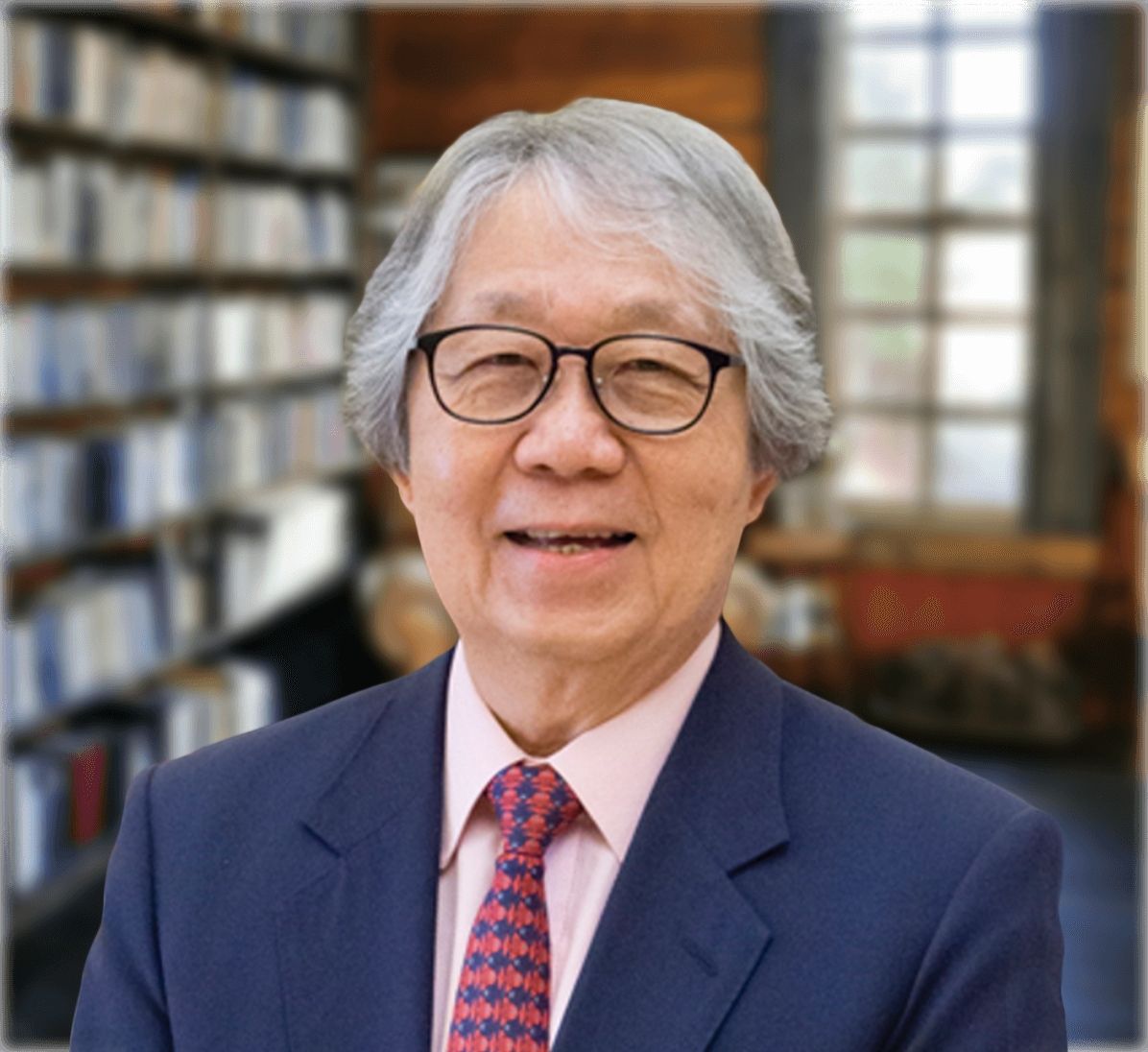
 Singapore
- A distinguished diplomat and legal scholar, TOMMY KOH has spent decades advancing international cooperation, dialogue, and the peaceful resolution of disputes among nations.
- He played a pivotal role in the negotiations that culminated in the United Nations Convention on the Law of the Sea (UNCLOS), helping establish a framework for the equitable and peaceful use of the world’s oceans.
- Beyond diplomacy, he has shaped generations of leaders through his work in academia, public policy, the arts, and civic institutions in Singapore and beyond.
- The RMAF board of trustees recognizes his exemplary leadership in international diplomacy and in the formation of a new generation of advocates devoted to the advancement of justice and human dignity the world over. Through his steadfast faith in dialogue, the rule of law, and international cooperation, he has helped make peaceful coexistence possible in a world of unequal power.
It takes great skill, wisdom, courage, and perseverance to ensure that the interests of smaller nations are represented and recognized on the global stage, for peace and progress to prevail over conflict and suffering.
Few statesmen have manifested these qualities better than Tommy Koh—a law professor from National University of Singapore (NUS) who applied his training and his values to diplomacy, showing the world that justice can prevail over power, and that even the smallest nations—and especially those communities whose lives depend on the sea—have rights that deserve to be respected.
Born in 1937 and educated as a lawyer and a legal scholar, Koh witnessed Singapore’s transition from British colonial rule, through its integration with Malaysia, to independence. In 1968, he entered his country’s foreign service as its youngest ambassador, representing Singapore at the United Nations. This would give him the exposure to global affairs that would serve him and his country and region well in the decades ahead.
In 1978, he chaired a pivotal negotiating committee of the Third United Nations Conference on the Law of the Sea, bridging a fundamental divide over seabed mining between wealthy and developing, capitalist and non-capitalist, maritime and landlocked nations. In 1982, as president of the entire conference, he led more than 150 nations to adopt the United Nations Convention on the Law of the Sea (UNCLOS). Of enormous significance to maritime countries, this “constitution for the oceans” defined territorial waters and the economic rights of countries to their coastal waters and provides mechanisms for settling disputes. He also chaired the Earth Summit in 1992. In 1993, the UN appointed him as its Special Envoy to make peace between Russia and its three Baltic neighbors—Estonia, Latvia, and Lithuania.
But for Koh, his work at home was always just as important. Ever the academic, he mentored a new generation of Singaporean leaders through the NUS Centre for International Law of which he was the founding chairman in 2009 and the NUS Tembusu College of which he was the founding rector in 2011. As long-time director of the Institute of Policy Studies, Koh maintained a trusted bridge between government and civil society. He has been a strong advocate for the arts and heritage in Singapore, as founding chairman of its National Arts Council (1991-1996) and chairman of the National Heritage Board. He has quietly pursued humanitarian initiatives in support of the disabled and handicapped and of animal welfare.
What emerges is a portrait of a committed humanist navigating a global ocean gravely threatened by forces inimical to the human spirit, yet speaking to power with the calm conviction of moral authority. Though Singapore is a country of means, he has shown that adversity is not the burden of the poor alone. Beyond serving Singapore, he has represented the globally vulnerable and dispossessed, securing recognition and respect for their rights and advancing a more equitable international order.
Building more than treaties and institutions, Koh has shaped generations of leaders, scholars, and public servants, leaving a legacy that extends through universities, policy institutes, museums, and the countless lives mentored.
Through all this, he has found the courage to speak out for the right and just. “The test of a country’s adherence to principle is when it is inconvenient to do so… This is why we must put our adherence to principle over friendship,” he once said of an act of war staged by one of Singapore’s staunchest allies. Even at home, he has championed freedom of expression, remarking that “Singapore does not need sycophants. It needs loving critics.”
His greatness of spirit lies in his unwavering commitment to the common good, his deep sense of duty to his country, his moral consistency in choosing law over power, dialogue over coercion, consensus over confrontation, institutions over personalities, and mentorship over self-promotion. In the end, his greatest achievement is not simply what he built, but how he built it. Character was always his most enduring instrument of leadership.
In electing Tommy Koh to receive the 2026 Ramon Magsaysay Award, the board of trustees recognizes his exemplary leadership in international diplomacy and in the formation of a new generation of advocates devoted to the advancement of justice and human dignity the world over. Through his steadfast faith in dialogue, the rule of law, and international cooperation, he has helped make peaceful coexistence possible in a world of unequal power.