
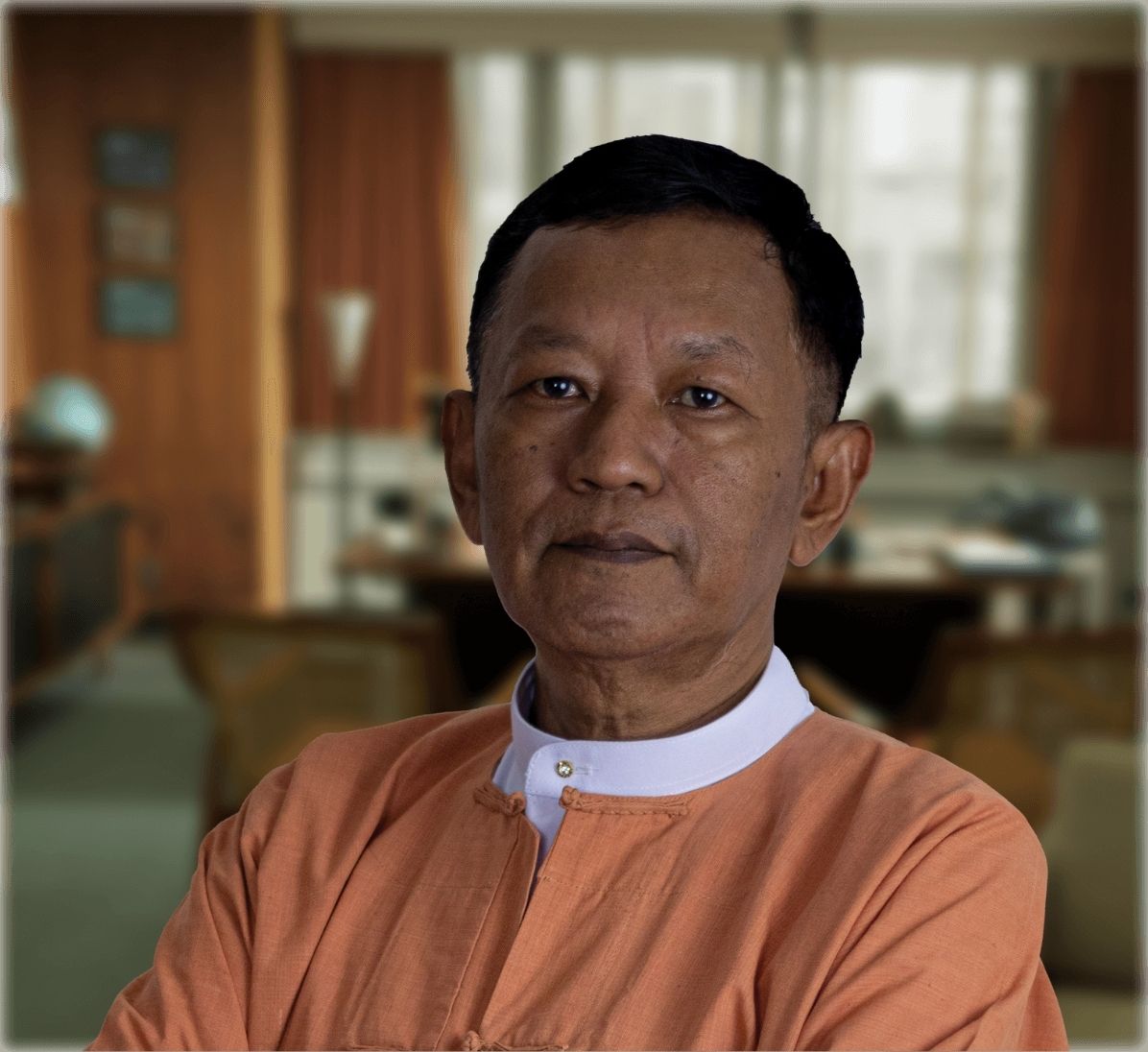

- BO KYI was arrested following Myanmar’s pro-democracy demonstrations in 1988 and was imprisoned twice, spending a total of seven years in detention.
- In 2000, he co-founded the Assistance Association for Political Prisoners (AAPP), providing support to detainees and their families while documenting human rights abuses under military rule.
- Through rigorous documentation and advocacy, AAPP has helped bring international attention to the plight of political prisoners, ensuring that their stories and sacrifices are not forgotten.
- The RMAF board of trustees recognizes his life’s work as a steadfast pursuit of truth, accountability, and justice. His enduring commitment reflects extraordinary moral courage, personal sacrifice, and an unwavering belief that democracy and human dignity are always worth defending—and that even in the face of oppression, the truth must be told, justice must be pursued, and the freedom to believe must be upheld and defended at all costs.
Many of them can be found in Myanmar (formerly Burma). Since 1962, except for a ten-year interlude from 2011 to 2021, a military regime has controlled the country. That rule has resulted in the systematic suppression of political and human rights, economic disaster, a civil war, and a humanitarian crisis. Since February 2021, when the military took power back from a civilian government in a coup, over 30,000 Burmese have been arrested, half of whom remain in prison. Estimates of people killed by the junta vary from just over 8,000 to as high as 100,000.
The plight of those prisoners—and of the families and the society around them—was painfully familiar to Bo Kyi. As a young student just about to graduate in 1988 at the Rangoon Arts and Sciences University, Bo Kyi watched his fellow students killed by the regime. He was soon swept up in the pro-democracy demonstrations that climaxed on August 8, 1988—thus the “8888” name for that protest movement. Bo Kyi plunged into working for the resistance. Soon, like many others, he was arrested and imprisoned—not once, but twice.
Altogether, Bo Kyi spent a total of seven years in prison. Not allowed to have books, he taught himself English in secret—writing sentences on the concrete floor with a shard of brick, learning from a professor held in the next cell, and even eating dictionary pages to hide them from the guards. Between detentions, the military tried to recruit him as an informer. He answered by demanding the release of all political prisoners and dialogue with Aung San Suu Kyi; when they refused, so did he—and went back to prison rather than send others there.
Soon after his release for the first time in 1993, alongside fellow former political prisoners, he raised money to support colleagues still behind bars and their families. He was jailed again, and after his second release in 1998, he fled across the Thai border to Mae Sot. There, in March 2000, Bo Kyi and his fellow former political prisoners organized the Assistance Association for Political Prisoners (AAPP). Its founding principle is simple, clear, and unwavering: “As long as political prisoners exist inside Burma, Burma will not be free.”
Sustained by a wide network of volunteers, families, lawyers, and former prisoners, AAPP devoted itself to documenting political imprisonment, supporting detainees and their families, and ensuring the continued visibility of the junta’s political prisoners in Myanmar and around the world. It saw the release of political prisoners not simply as a humanitarian imperative, but a necessary step toward restoring democracy, reconciliation, and lasting stability in Myanmar, as well as connecting the realities of political imprisonment in Myanmar to the global struggle for freedom, justice, and accountability.
Working with both great care and courage, AAPP has brought thousands of forgotten names and faces out of the darkness.
Bo Kyi and his fellow activists know that there are wounds deeper than those inflicted on the body. The slow destruction of the human spirit is often the cruelest form of imprisonment. By drawing attention to prisoners of conscience and by preserving their stories, he has helped restore their personhood and reclaim their future, while ensuring that their suffering and sacrifice have not been in vain.
In electing Bo Kyi to receive the 2026 Ramon Magsaysay Award, the Board of Trustees recognizes and honors his life’s work as a steadfast pursuit of truth, accountability, and justice. His enduring commitment reflects extraordinary moral courage, personal sacrifice, and an unwavering belief that democracy and human dignity are always worth defending—and that even in the face of oppression, the truth must be told, justice must be pursued, and the freedom to believe must be upheld and defended at all costs.