
 Philippines
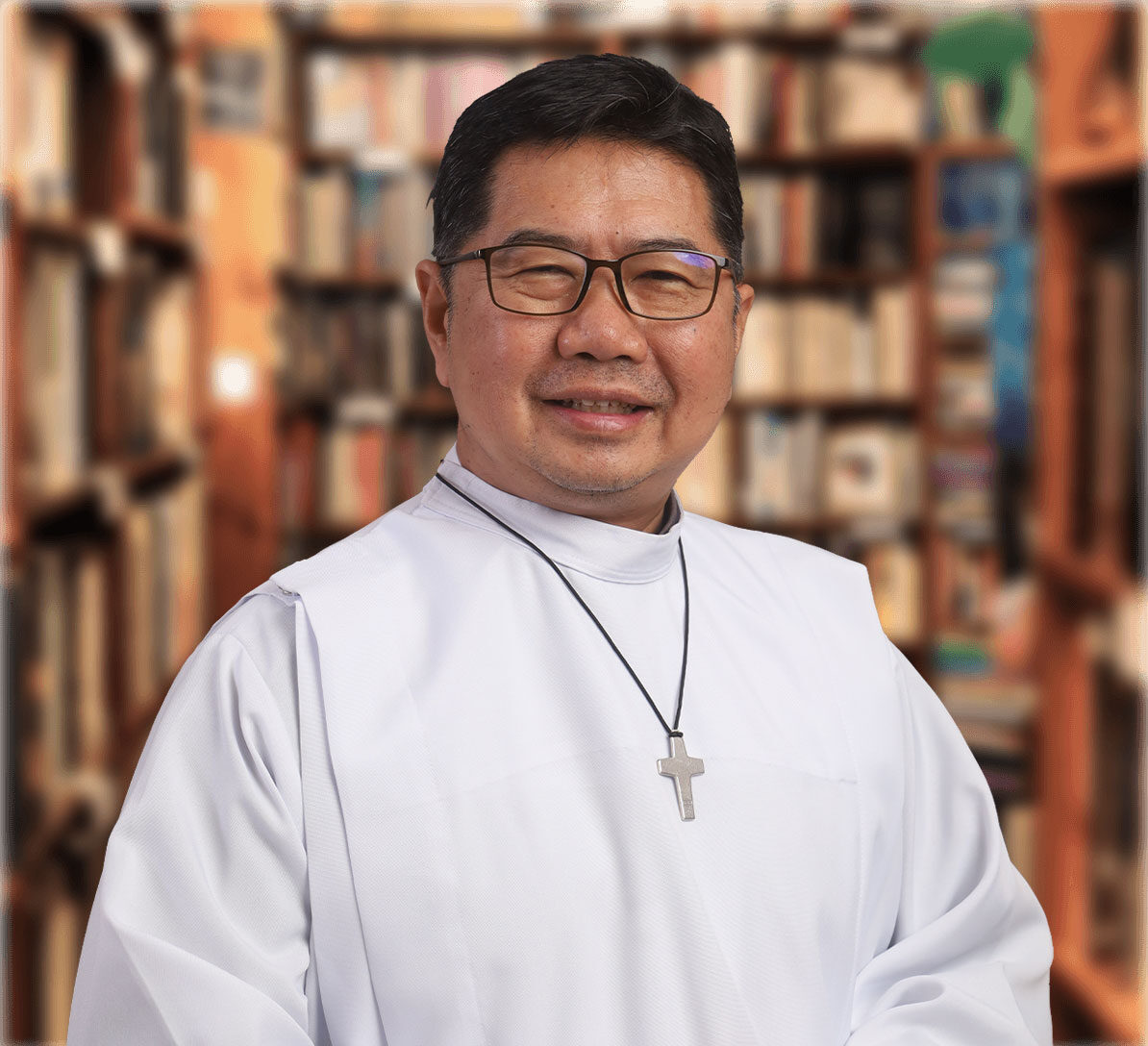
- Fr. FLAVIANO ANTONIO L. VILLANUEVA is missionary priest of the Societas Verbi Divini (SVD) who embodies redemption by dedicating his life to restoring dignity and hope among the underserved.
- He founded the Arnold Janssen Kalinga Center in 2015 to provide “dignified care and service” for society’s marginalized—offering food, showers, counseling, and livelihood support to help them rebuild their lives with self-respect.
- Through the Paghilom (Healing) program, VILLANUEVA organized the exhumation, cremation, and inurnment of victims of the drug war, providing families a place of remembrance and healing at the Dambana ng Paghilom (Shrine of Healing).
- The RMAF board of trustees recognizes his lifelong mission to uphold the dignity of the poor and the oppressed, daily proving with unwavering faith that by serving the least of their brethren, all are restored.
Poverty and the suffering that comes with it are difficult enough. But for billions of people around the world—and certainly millions in the Philippines—being poor has not only meant material privations, but also the loss of pride and dignity, access to justice, social services, and too often, the loss of hope and a sense of being human.
For one Manila-based, religious-missionary priest of the Societas Verbi Divini (SVD), helping the poor involves much more than providing food, clothing, and shelter. It means recognizing their human dignity—even through such simple means as giving them a bath, a surprisingly restorative and quintessentially Christian gesture. That respect extends to the departed whose families are too poor to give them a proper burial.
Flaviano Antonio L. Villanueva or simply “Father Flavie” belongs to that breed of socially committed clergy for whom godliness is to be found not in the halls of influence and wealth but in the streets, among the poorest and the most forgotten. Nursing the physically and spiritually afflicted back into the mainstream of society has become his life’s work.
In 2015, he founded the Arnold Janssen Kalinga Center in Manila to provide “dignified care and service” to indigent and powerless citizens, serving thousands of marginalized Filipinos. These beneficiaries are people of all ages and backgrounds, including those who may have engaged in drugs and petty crimes. He believes they deserve a second chance at leading decent lives, regardless of their past. Kalinga works to recreate the poor’s self-image, reclaim their self-respect, and restore their self-worth.
In a remarkable twist of fate, their redemption and renewal are Villanueva’s own, for he himself was once a self-confessed drug user since age 14 until he turned around in 1995, volunteering as a lay missionary in Bicol. In 1998 he entered the seminary and was ordained a priest in 2006. Today, Villanueva draws on that incredible transformation to prove that even the most wayward and destitute can find redemption and renewal.
Villanueva also led the effort to locate the bodies of victims of the government’s “war on drugs” where thousands of Filipinos were summarily executed. Adding more pain to this injustice was the inability of the dead’s impoverished families to secure permanent graves for them. Addressing their plight, Villanueva mobilized resources to provide funds for the exhumation of the bodies for their cremation and inurnment, and relocation to a proper resting place. Dambana ng Paghilom (Shrine of Healing) is the first memorial columbarium in the country for victims of the drug war, where both the living and wounded souls can find respite and healing. Villanueva’s Paghilom program has not only brought comfort to widows and orphans, but has also allowed them to continue leading productive lives. “I felt a strong affinity with the widows,” Villanueva says. “They had lost their family’s breadwinner, and were desperate. The Center’s Paghilom program welcomed them, providing dignified, holistic care encompassing emotional and spiritual restoration.”
Expectedly, Villanueva’s prophetic and activist ministry attracted critical attention from authorities, and in 2020, he and ten other citizens, including another Catholic priest, were accused of sedition—a charge that was dropped in 2023, although the death threats never stopped. These experiences left Villanueva even more resolved to seek justice for the poor. Here again, he emphasizes that justice extends beyond the legal realm. “Justice can take many forms—among them, the recovery of one’s self-confidence, and forgiving oneself.”
Beyond preaching, Villanueva employed his management skills to undertake a needs analysis of his constituency—and he realized that the poor needed not just food but dignity. Following the late Pope Francis’ example, he initiated showers for the homeless as both a literal and symbolic act of cleansing, to prepare them for a fresh start in life. He had them pledge that “As I have been cared for, so shall I care for others with joy,” expanding the circle of Christian charity even further.
When lives were reduced to statistics, he stepped up, with his heart on his sleeve, offering not merely shelter and food to the marginalized but a sense of worth, and human connection long denied. With deep compassion and quiet defiance, he created spaces to rebuild what were unjustly erased by healing the broken, leading home the abandoned, and rekindling hope when it seemed all but lost.
In electing Fr. Flaviano Antonio L. Villanueva to receive the 2025 Ramon Magsaysay Award, the board of trustees recognizes his lifelong mission to uphold the dignity of the poor and the oppressed, daily proving with unwavering faith that by serving the least of their brethren, all are restored.
Good evening.
To the Board of Trustees of the Ramon Magsaysay Award Foundation, to my fellow awardees, to my SVD family, and to everyone who believes that faith and justice can walk hand in hand—maraming salamat po.
When I first learned of this award, I simply grew quiet—and I realized, this honor was never about me, but about the many lives and hands that gave it meaning: the homeless man and woman who asked not for food but for dignity, the mother who searched for her son taken by violence, and the volunteers who show up each day with open hearts.
This honor belongs to them.
And so tonight, I receive this Award not as a prize, but as a voice for those who are often silenced.
For the countless voiceless victims of the war on drugs—at least eighty of whom are here with us today.
For the thousands of homeless still wandering the streets, seeking not only a meal, but a little mercy—those whose karitons have been kicked aside by power, and crushed under indifference.
And I receive it, too, for the countless defenders of human and environmental rights, who keep speaking the truth, even when truth demands everything of them.
Because when injustice persists, silence wounds the soul.
To stop the bleeding we need to start the healing.
To start the healing, we should continue asking the difficult questions:
- How many were truly killed?
- How come the perpetrators and killers are still at large?
- Who are the real people responsible of having blood in their hands?
I STRONGLY propose and support the creation of an EJK TRUTH COMMISSION.
Ano na ba ang ating sigaw?
Sobra na. Tama na. Ikulong na!
But behind these cries is not anger alone—it is love, wounded yet still alive. Behind this work is a story—one I proudly tell.
There was a time when I, too, was lost—a young man once touched by darkness, until mercy found me.
That encounter with mercy changed everything.
It restored in me the will to live, the courage to love again. From my own brokenness, I learned that healing is never one-sided—for in redeeming others, I, too, am redeemed.
Out of that grace was born a calling—and from that calling, the Arnold Janssen Kalinga Center—where maligo becomes a sacrament, a meal becomes communion, and every act of care becomes a prayer.
In each bath becomes a sacrament, each shared meal becomes a communion, we reclaim not just the body, but the dignity that poverty tries to steal.
Ang Kalinga—hindi lang ito pangalan ng proyekto.
It stands for Kain, Aral, Ligo, ng Ayos— Eat, Learn, Bathe, to Live Anew.
Simple words that remind us: the Gospel is not only preached from pulpits, but lived out in basins of water, shared rice, and listening hearts.
It is here where the poor re-create their self-image, reclaim their self-respect, and restore their self-worth.
Through the years, I have walked with the forgotten—the homeless, the addicted, the families left behind by the drug war. I have seen mothers carry grief heavier than any cross, and yet whisper, “Salamat pa rin, Panginoon.”
I have witnessed how forgiveness can bloom where fear once ruled, and how God hides in those the world refuses to see.
Through Paghilom, we have seen how healing begins where justice once failed—among widows, orphans, and those told they no longer matter. When mercy embraces their sorrow, it becomes the justice that restores what violence has taken.
There were times when truth became dangerous, when mercy was mistaken for rebellion, and compassion was branded as defiance. But each time, I remembered what I tell our volunteers: “Hindi tayo tinawag para maging ligtas; tinawag tayo para maging tapat.”
We are not called to be safe—we are called to be faithful.
And when you walk with the wounded, you let their pain touch your own. But in those wounds, we meet Christ again—not in statues, but in the living, the broken, the brave.
And so I have learned that greatness of spirit is not about power or prestige, but about choosing—again and again—faith over despair, compassion over indifference, truth over fear, and always, Christ above all else.
Because hope is what the poor have taught me. They have shown me that dignity can rise even from the streets, that kindness is stronger than cruelty, and that love—when lived—is the only revolution that lasts.
A special message to the young who are listening: You may not all wear collars or habits, but each of you carries a calling.
Look around you—someone’s hunger, someone’s grief, someone’s silence—that is your altar.
You do not need permission to be kind; only the courage to begin.
Hindi tayo tinawag upang mamuno, kundi upang makibahagi.
We are not called to rule, but to accompany.
I dedicate this Award to those whose names may never appear on plaques or in the news—the families of the slain, the poor who still dream, the volunteers who choose compassion over comfort, and my fellow missionaries who believe that the Church must carry the scent of its people.
And to those who still doubt that goodness can win—look again. Every act of care, every moment of courage, is proof that light still breaks through.
Dilexi Te —“I have loved you.”
These are not just words from Scripture; they are the heartbeat of our vocation.
It is love that moves the hands that wash tired feet, love that opens the arms that keep embracing the rejected, and love that strengthens the hearts that keep believing that mercy will always be stronger than fear.
The Ramon Magsaysay Award is not an ending, but a sending—not a medal to display, but a mission to renew.
A call to keep washing the tired feet of our nation, to keep rekindling hope where it was buried, so that by serving the least of our brethren—we may all be restored.
Muli, Maraming maraming salamat po.
Maglakad po tayo sa liwanag—magkasama!